
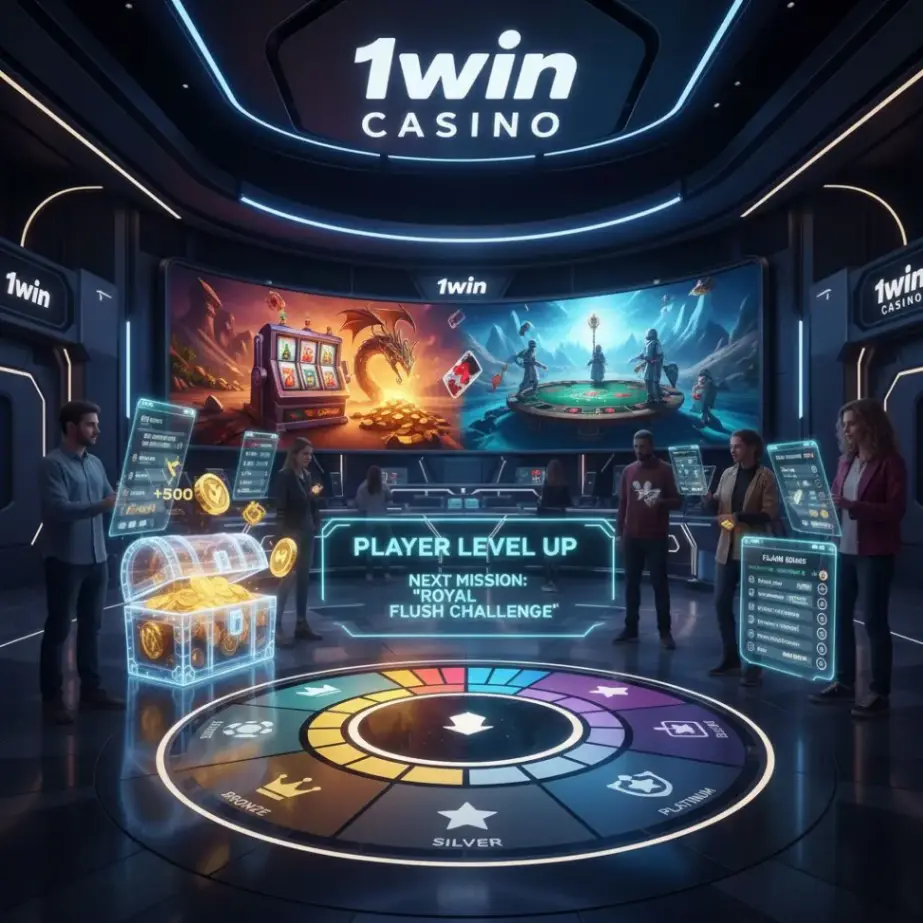
Gamification has become one of the most influential design strategies in the online-casino industry, and 1Win Casino is among the operators that integrate it most effectively. Instead of relying solely on traditional bonuses, the platform uses layered progress systems, mission structures and reward loops that keep players engaged while encouraging long-term retention. In this article, we explore how gamification enhances user experience at 1Win, what mechanics shape the platform’s reward ecosystem and which examples showcase these features in action. The goal is to break down how missions, leveling, achievements and bonus formats work together to form an interconnected system of progression.
How 1Win Casino Uses Missions to Guide Player Progress
Missions are one of the most recognizable gamification tools at 1Win Casino. They transform ordinary gameplay into a sequence of tasks tied to achievement-based rewards. These missions are structured to help both new and returning players explore the platform, understand different games and stay motivated across longer sessions.
The mission system at 1Win is built on progressive tiers: beginner, intermediate and advanced tasks. A mission may require placing a certain number of bets, activating a feature within a slot, reaching a minimum wagering turnover or completing a series of daily objectives in a row. Once missions are completed, players unlock bonus rewards such as free spins, cashback, points or access to exclusive events.
A strong example of mission-driven engagement is the recurring “Daily Strike Challenge,” where players need to log in, play selected games and complete measurable milestones. Completing the entire challenge chain during the week often unlocks premium bonuses or enhanced VIP points. This design encourages consistency while maintaining transparent reward expectations.
Bonuses, Reward Loops and Example Scenarios
Bonuses remain central in gamification design, but at 1Win they are presented not just as static promotions but as dynamic elements of a broader progression system. Instead of simply claiming a deposit bonus, players interact with evolving reward loops that connect missions, experience points, and performance-based boosts.
A notable mechanic is the adaptive bonus model, where the size or type of reward depends on player activity. For example, completing a set of slot-focused missions might trigger a cascading bonus sequence: first free spins, then a higher-value cashback tier, and eventually a special bonus that is unlocked only after reaching a specific XP threshold. These loops make the casino environment feel more like a structured game world rather than a standard betting interface.
In practice, this means that a player spinning reels in a themed slot like “Mystic Pyramid” could progress through missions tied to scatter symbols, collect achievement badges for triggering bonus rounds and finally reach a milestone that grants level-up rewards. Gamification connects all these tasks into a smooth path rather than a disconnected series of bonuses.
Mid-Article Overview of Key Gamification Elements
Before going deeper into the progression mechanics, it is useful to outline the primary gamification tools used by 1Win. These form the basis of most engagement strategies on the platform and appear across both casino and live-casino sections.
Here is a concise list of the main gamification elements players frequently encounter at 1Win:
- Mission-based challenges and time-limited quests.
- Tiered reward ladders and XP-based progression.
- Achievement badges for completing gameplay milestones.
- Adaptive and event-based bonuses.
- VIP levels connected to gameplay metrics.
Each of these mechanics plays a specific role in shaping player engagement. After interacting with them over time, users begin to see how the structure resembles a video-game progression model, where every session contributes to a long-term goal.
Following the list, it becomes evident that gamification is not just a single feature but a layered system designed to make gameplay more rewarding and intuitive.
How Gamification Formats Work Together
The following table summarizes how common gamification tools at 1Win Casino interact with each other and what benefits they typically bring to players. It will help illustrate the structural logic behind the progression model.
| Gamification Tool | Core Function | Example at 1Win | Player Benefit |
|---|---|---|---|
| Missions & Quests | Guide activity and exploration | Daily or weekly task chains | Consistent motivation and rewards |
| XP & Levels | Track long-term progress | Level-up bonus milestones | Unlockable rewards and VIP access |
| Achievement Badges | Celebrate gameplay milestones | Slot-based badge collection | Sense of accomplishment |
| Adaptive Bonuses | Adjust rewards to user activity | Cascading bonus paths | Personalized incentives |
| VIP Tiers | Reward loyal players | Tier-based cashback rates | Better long-term value |
This table shows how each part of the system reinforces another. Missions feed XP, XP unlocks bonuses, achievements add recognition, and VIP tiers provide long-term motivation. Gamification evolves into a loop that encourages steady progress rather than short-term bursts of activity.
XP, Leveling and Long-Term Player Motivation
The experience-point (XP) model used by 1Win Casino is another pillar of its gamification strategy. As players complete missions, engage with featured games and maintain consistent activity, they accumulate XP that contributes to their overall account level. Each level presents rewards such as boosted free-spin values, enhanced cashback percentages or access to exclusive tournaments.
The leveling system is intentionally paced to strike a balance between steady advancement and meaningful effort. Early levels reward players quickly to build momentum, while later stages require more engagement but offer significantly higher bonuses. This technique—common in mobile and RPG game design—helps maintain motivation even for high-activity players who value long-term progression.
One of the strongest examples of this design is the “Seasonal Level Rush,” a limited-time XP competition where users race to reach the highest tier before the season ends. The top performers often receive substantial prizes or personalized promotional packages, underscoring the competitive dimension of gamification.
Real Examples of Integrated Gamification at 1Win
To understand how these systems affect player experience in real scenarios, consider the following examples:
Example 1: Slot Adventure Path
A player begins a mission in themed slots, completing micro-tasks such as triggering free spins or collecting rare symbols. Completing each section of the mission grants XP, which contributes to level-up bonuses. As the player rises in level, new missions unlock with higher rewards and more challenging objectives.
Example 2: Live-Casino Performance Challenges
In selected live-casino games, players can earn points for winning streaks, reaching certain payout thresholds or placing special side bets. These points contribute to daily leaderboards, which offer bonuses or extra spins for top-ranked participants.
Example 3: Event-Driven Mega Missions
During holiday campaigns, 1Win introduces multi-stage missions where completing one mission unlocks the next. Players who finish the entire chain may enter exclusive prize drawings, access upgraded bonus tiers or receive seasonal achievement badges.
Each example shows how missions, bonuses, XP and achievements blend into a unified system, creating engagement loops that align with modern player expectations.
Why Gamification Enhances User Satisfaction at 1Win
Gamification is not just a marketing tool—it influences the overall psychology of player engagement. At 1Win Casino, structured missions break monotony by offering concrete goals, while achievement badges provide instant gratification. XP and leveling systems create a sense of continuous growth, mimicking the motivational design of popular mobile and console games.
Moreover, adaptive bonus mechanics ensure that casual and high-stakes players receive incentives aligned with their gameplay style. This personalization increases satisfaction and reduces churn. VIP tiers reward loyalty, reinforcing long-term engagement and offering a sense of exclusivity.
Collectively, these systems elevate the experience from mere wagering to interactive entertainment. Players feel guided, rewarded and emotionally invested in their progress, which is the core purpose of gamification.
Conclusion
Gamification at 1Win Casino represents a deliberate strategy focused on improving user experience through missions, bonuses, achievements, XP progression and competitive events. By integrating multiple reward mechanisms into a cohesive system, 1Win creates an environment where players feel motivated, recognized and continuously engaged. From daily quests to seasonal competitions, the platform demonstrates how modern online casinos can use game-design principles to build loyalty and enhance entertainment value.